
Home›Blog›Why Snaking Keeps Failing
Why your Simpsonville drain
keeps backing up after
every snake job
Snaked three times in two years and it keeps coming back? That’s not bad luck. It’s a specific mechanical problem the snake is physically incapable of fixing. Here’s exactly why — and what actually ends the cycle for good.
- The snake cuts the root mass. It can’t seal the joint the root entered through.
- Roots regrow through the same gap — faster each time.
- Camera finds the exact joint. CIPP seals it permanently.
- One job ends what repeated snaking resets every 8–18 months.
Stop the Cycle
Find out what the snake keeps missing
📞 (864) 474-4318📋 Request Written Estimate- Camera inspection $150–$300
- Locates the root entry joint exactly
- CIPP seals it — one job, permanent
- Zero after-hours surcharge
- Real person answers 24/7
through the same unsealed joint
find active root intrusion
never solves the problem
ends the cycle permanently
What a drain snake actually does — and the specific thing it can’t do
A mechanical drain snake is a steel cable with an auger head. You feed it through the cleanout, it reaches the blockage, the rotating head cuts through or breaks apart whatever is there, and the blockage clears enough for water to move. It takes 20–40 minutes and it feels like the problem is solved.
It isn’t. The snake addressed the symptom — the root mass filling the pipe cross-section. But it didn’t address the cause: the displaced joint the roots entered through. That joint is still open. It was open before the snake arrived and it’s open after. The roots that were cut will regrow through exactly the same gap, often branching more densely because the mechanical disturbance stimulates root branching.
This isn’t a failure of skill or a cheap snake. It’s a physical limitation of what the tool can do. A snake is a cutting tool, not a sealing tool. Cutting the root mass without sealing the entry point is exactly like cutting weeds at the stem without pulling the root. The weeds come back. The roots come back.
No. “Just how it is” is what a plumber says when they’re not offering you the right tool. The right tool for root intrusion through a displaced joint is CIPP lining — a jointless liner that creates a new pipe surface inside the old one, eliminating every joint gap the roots used. It’s not a maintenance cycle. It’s a one-time fix. The plumber telling you to keep snaking annually either doesn’t offer CIPP or isn’t recommending it. Either way, call us for an independent camera look.
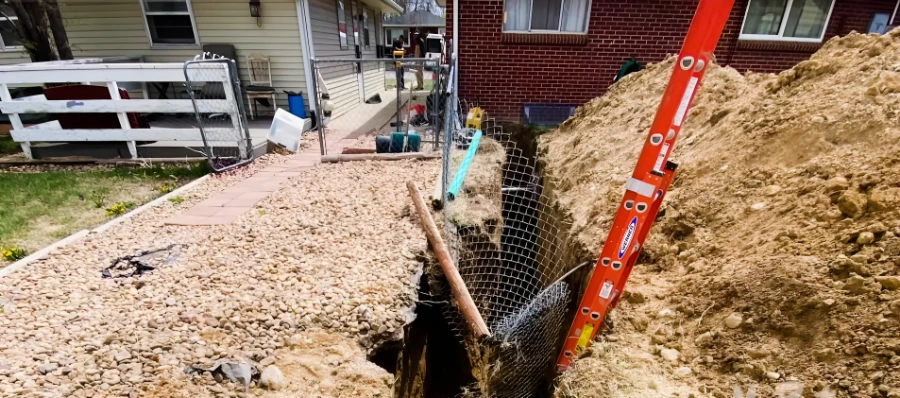
Access point for CIPP lining in Simpsonville — no full trench required for most root intrusion repairs
⚠️ Three signs you’re in the snaking cycle vs. having a one-time clog: The backup happens in the same drain every time. The slow drain returns within 6–18 months after snaking. The plumber has never run a camera and shown you footage of what’s causing it. Any one of these signals means the underlying problem was never diagnosed — it was bypassed.
Snake vs. CIPP — what each actually does
🔧 Mechanical snake
Cuts or compresses the root mass inside the pipe. Restores flow temporarily. Does not seal the joint the roots entered through. Does not remove all root fiber. Does not prevent regrowth. Resets the clock by 6–18 months, after which the same root mass returns through the same gap.
💧 Hydro jet + CIPP (the right answer)
Hydro jetting at 4,000 PSI removes the root mass completely from the pipe wall. Camera identifies the displaced joint the roots entered through. CIPP lining creates a continuous jointless liner inside the host pipe — no joints for roots to find. Permanent. One job ends the cycle.
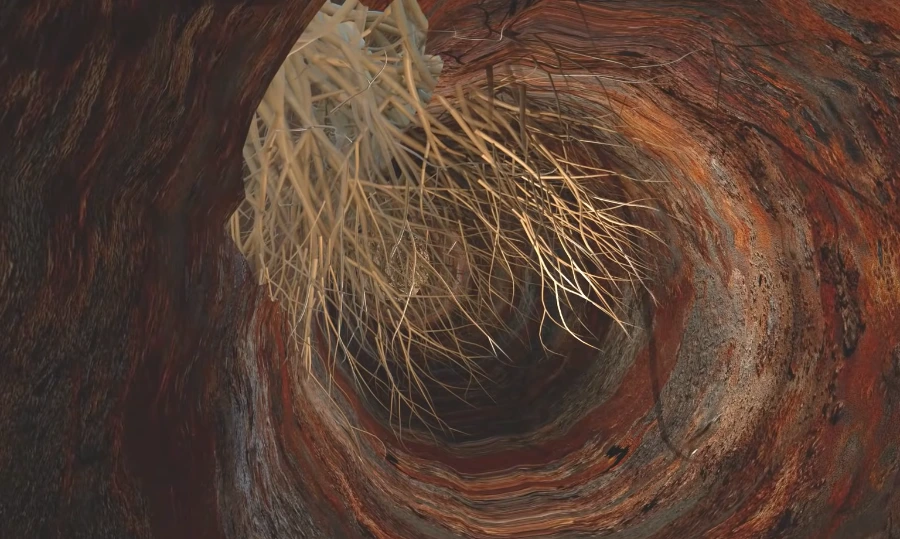
Loblolly root mass filling a Simpsonville lateral — this is what a snake cuts through but doesn’t seal
✓ The math: Three years of annual snaking at $350/call = $1,050 and the problem still exists. One camera + hydro jet + spot CIPP = $1,800–$2,800 and the problem is gone. Not a difficult comparison.
Why Simpsonville homes are especially prone to the snaking cycle
The specific combination that creates repeat snaking customers in Simpsonville: Cecil clay that expands 15–20% seasonally, displacing bell-and-spigot joints every year for 30–50 years. Loblolly pine — 44% of SC’s tree population — with root systems extending 30–50 feet from the trunk, finding those displaced joints. Pre-1990 clay pipe designed for 40–50 years of service, now at or past that window. These three forces work together. A snake addresses none of them. Camera and CIPP address all of them.
The specific findings behind Simpsonville’s most common repeat snaking situations
These are the four camera findings that create the snaking cycle. Each has a permanent fix. None of them is “just how it is.”
Root mass at displaced joint
The most common finding on pre-1990 Simpsonville laterals. Loblolly or sweetgum roots entered through a bell-and-spigot joint displaced by decades of Cecil clay movement. The snake cuts the mass. The joint stays open. Roots regrow. Fix: hydro jet clearing + CIPP liner sealing the joint. Permanent.
Partial belly accumulation
A low spot in the lateral where the grade is wrong. Solids accumulate at the belly over years. Snaking passes through the accumulation temporarily but can’t correct the grade. Solids rebuild. Fix: excavation to correct grade at the belly. CIPP cannot fix a belly — it would liner the sag in place.
Grease coating reducing diameter
Kitchen laterals in Simpsonville homes with heavy cooking see grease (fats, oils, grease — FOG) coat the pipe wall progressively. A snake passes through. Jetting scours the wall back to near-original diameter. Fix: hydro jetting — the only tool that removes the coating, not just passes through it.
Yes — and “probably not necessary” from someone who benefits from annual snaking visits is not a neutral recommendation. A camera inspection for $150–$300 tells you exactly which joint the roots are entering through, exactly how far it is from your cleanout, and whether the host pipe can take a CIPP liner. If the camera shows a viable pipe, one CIPP job ends the annual cycle permanently. The plumber who told you there’s nothing to do is either unaware of CIPP lining or not offering it.
Four steps from “snaked again” to “never thinking about this again”
This is the specific sequence we use for every Simpsonville homeowner who calls us after repeated failed snaking. It works because it addresses the cause, not the symptom.
Camera inspection
$150–$300. Same day. The camera runs through your cleanout and locates every finding in exact feet. We see the root mass. We see the joint it entered through. We see the pipe wall condition on either side. We document everything with footage you watch in real time. This is what every snaking visit was missing.
Hydro jetting
$300–$800. High-pressure water at up to 4,000 PSI clears the root mass completely from the pipe wall — not compressed, not cut, flushed. The forward jets cut through the mass; the rear-facing jets scour the pipe wall clean. Post-jetting, the camera goes back in to confirm the pipe is clear and to assess the host pipe condition for lining.
CIPP liner
$1,200–$8,000 depending on length. A resin-saturated liner is inserted through the cleanout and cured in place against the host pipe wall. It creates a continuous, jointless pipe surface inside the old pipe. Every joint gap — including the one the roots entered through — is eliminated. Roots cannot enter a jointless surface. This is the step that ends the cycle.
Post-liner camera confirmation
We run the camera one more time after the liner cures to confirm proper installation, full wall contact, and no defects. You see the before and after footage. The liner is documented. You now have a 50-year pipe inside your old one, and there are no joints for roots to enter.
From people who were in the annual snaking cycle — until they weren’t
“We had it snaked twice in 18 months. The second plumber said it just needs to be done every year or two. Golden Strip scoped it, showed us the cracked joint the root was entering through. CIPP sealed it. Eighteen months later — zero problems. Should have called them first.”
“Root intrusion coming back every year for three years. Golden Strip scoped it, showed us the loblolly entry point at 41 feet, lined it. Two years later — zero issues. I wish I had done this before year one of snaking. Would have been cheaper overall.”
“Had the line snaked on our Five Forks home twice in 18 months. It keeps coming back. Golden Strip found a sweetgum root mass at 29 feet and the cracked joint it entered through. CIPP lined it. Two years later — zero issues. Camera first changed everything.”
Questions we get from homeowners stuck in the snaking cycle
How do I know if I need CIPP or if snaking is actually enough?+
The camera tells you. CIPP is warranted when the camera shows root intrusion entering through a displaced joint with a host pipe that has sufficient wall integrity to bond a liner to. If the camera shows that — and on pre-1990 Simpsonville laterals it usually does — CIPP is the right answer and snaking is the wrong one. If the camera shows a different problem (belly section, structural collapse, Orangeburg delamination), a different fix applies. Without the camera, you’re guessing. The camera costs $150–$300 and takes 45 minutes.
Will hydro jetting alone fix my recurring backup, or do I need CIPP too?+
Hydro jetting will clear the root mass more thoroughly than a snake — but it won’t seal the joint the roots entered through. In Greenville County’s clay soil with mature loblolly and sweetgum, root regrowth through the same unsealed joint typically takes 18–36 months after jetting vs. 6–18 months after snaking. Jetting buys more time. CIPP after jetting ends the cycle permanently. If you’re going to jet, get a camera inspection first, assess the host pipe for CIPP viability, and line it in the same visit if viable. That’s the complete fix.
How much does it cost to end the snaking cycle permanently?+
Camera inspection: $150–$300. Hydro jet clearing: $300–$800. Spot CIPP liner at the problem joint: $1,200–$3,000. Full-length CIPP if the whole lateral needs lining: $3,000–$8,000. The total for camera + jet + spot CIPP on a typical Simpsonville lateral with one or two problem joints runs $1,800–$3,500. Compare that to 5 years of annual snaking at $300–$400 per call ($1,500–$2,000) while the underlying problem keeps developing. The economics strongly favor fixing it once.
My plumber says CIPP won’t work on my old clay pipe. Is that true?+
Not categorically. CIPP was originally developed specifically to rehabilitate aging clay and cast-iron infrastructure. Clay pipe is actually an excellent host pipe for lining when the walls are structurally intact. The camera determines whether your specific pipe is viable for CIPP. The question isn’t whether the pipe is clay — it’s whether the walls have sufficient integrity. If a plumber told you CIPP won’t work without running a camera and showing you the footage, they’re giving you an uninformed opinion. Ask to see the camera footage. If they can’t show it to you, call us.
We have a loblolly pine 12 feet from the sewer line. Should we remove the tree?+
Tree removal is rarely necessary if CIPP lining is done correctly. The liner eliminates the joint gaps the roots enter through — no joints means no entry points regardless of how aggressive the root system is. Removing a mature loblolly pine is expensive, potentially damaging to your yard, and doesn’t help the lateral that’s already been penetrated. Camera + hydro jet + CIPP is the right answer. The tree can stay.
Camera. Hydro jet. CIPP. One time. Done.
Serving Simpsonville, Mauldin, Fountain Inn, Taylors, and Greer. Same-day scheduling. Zero after-hours surcharge. Real person answers 24/7.
📞 Call (864) 474-4318 Book Camera Inspection